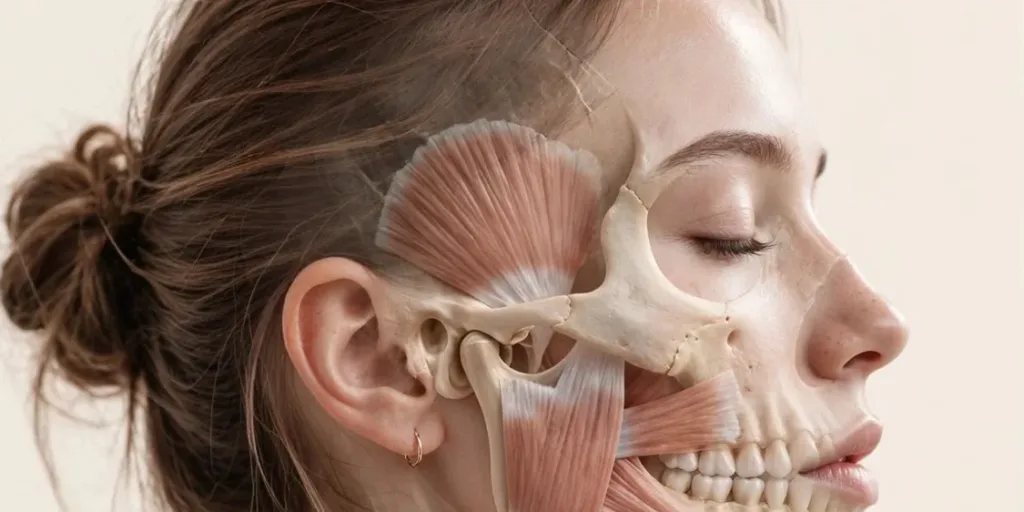
The scientific literature identifies two main factors that make the masticatory muscles particularly prone to hyperactivity, more than any other muscle group in the human body.
The first is the increase in emotional tension, a condition that is now extremely widespread in the population. Psychological stress tends in fact to manifest itself through an increase in muscle tone, particularly involving the masticatory system.
The second factor is the presence of occlusal interferences, that is, alterations in the normal contact relationships between the teeth. These can arise relatively easily following dental restorations, prosthetic rehabilitations, orthodontic treatments or other dental procedures that modify occlusal balance.
The increased demand for dental care and the growing number of patients undergoing restorative, prosthetic and orthodontic treatments have made this aspect increasingly relevant in clinical practice.
The association between emotional stress and occlusal interferences can influence the type and severity of muscle disorders. One may observe, for example, patients with significant occlusal alterations but reduced emotional involvement, as well as individuals under high levels of stress despite a substantially balanced occlusion. The condition of greatest risk is the simultaneous presence of high emotional tension and significant occlusal interferences, a situation in which the likelihood of developing pain and dysfunction of the masticatory muscles increases.
Naturally, muscle hyperactivity may also have other causes, including postural alterations, direct or indirect trauma and numerous other local and systemic factors.
The role of stress
It is now widely recognized that psychological stress profoundly influences the muscular activity of the body.
Hans Selye, considered the father of modern stress research, defined it as “the non-specific response of the body to any demand from the environment”, emphasizing that it is not the event itself that determines the biological response, but the way in which the body adapts to it.
Contrary to what is commonly thought, stress is not necessarily negative. There are in fact pleasant and motivating events that induce a physiological response similar to that caused by unfavorable situations. The stimuli capable of generating this response are called stressors and can be either positive or negative.
Every stressor requires the body to undergo a process of adaptation. The greater the intensity of the stimulus, the greater the energy the body will have to mobilize to maintain its internal balance.
How is tension discharged?
The energy produced by the stress response must find a way to be discharged.
In some individuals it is expressed outwardly through evident behavioral reactions, such as outbursts of anger, impulsive gestures or aggressive verbal expressions. Although socially not very acceptable, these represent a direct form of releasing tension.
Much more frequently, however, stress is internalized. In these cases the emotional tension translates into a somatic response that can contribute to the appearance of numerous disorders, including gastrointestinal diseases, hypertension, cardiovascular disorders, skin alterations and, in the dental field, parafunctional activities of the masticatory system.
Numerous studies have shown that individuals subjected to chronic stress present an increase in the contractile activity of the skeletal musculature, with particularly marked involvement of the masticatory muscles. Even in everyday clinical practice it is common to observe, in stressed patients, an increase in tension of the cervical and dorso-cervical musculature.
Stress and bruxism
Despite the considerable progress of research, the mechanisms by which emotional stress causes an increase in the activity of the masticatory muscles are not yet fully clarified.
Some psychodynamic theories have hypothesized that bruxism represents a form of regression to the so-called oral phase of development, a period during which the mouth constitutes the main means of relating to the environment and of expressing emotions. Anxiety, fear, anger and frustration would thus be unconsciously channeled through the activity of the oro-facial musculature.
Many parafunctions, such as biting the nails, gnawing objects, clenching or grinding the teeth, can over time turn into genuine automatic habits. Although often unconscious, they can have important consequences on the health of the stomatognathic system, causing muscle fatigue, pain, dental wear and overload of the temporomandibular joints.
One of the most accepted hypotheses suggests that, when emotional tension exceeds a certain threshold, specific nerve circuits are unconsciously activated that increase the activity of the muscles that elevate the mandible. Since in adulthood the childhood modes of emotional expression, such as crying or shouting, are largely inhibited, tension can be channeled toward the masticatory system, turning the muscles of mandibular closure into the main “target organ” of the stress response.
It is important to emphasize that the most recent knowledge considers bruxism a multifactorial phenomenon. Stress is certainly one of the main predisposing factors, but it interacts with central neurological mechanisms, sleep quality, individual predisposition and other biological factors, making this condition the result of the interaction of multiple components.
Dr. Massimiliano Costantino
This site uses technical cookies required for it to work and, only with your consent, third-party content (Google Maps). Read the Privacy Policy and the Cookie Policy.